Jordan · Middle East
Petra: a complete travel guide
A Nabataean capital carved into sandstone over two thousand years ago, best understood over two days rather than one — and best combined with Wadi Rum.
- The Treasury
- The Monastery
- The Siq
- Little Petra
- Wadi Rum
Orientation
Petra was the capital of the Nabataeans, an Arab trading people who controlled the incense routes between southern Arabia and the Mediterranean from roughly the fourth century BC. What survives is not a city of buildings but a city carved into rose-coloured sandstone cliffs: tombs, temples, a theatre cut for around 8,500 people, and a water system of channels and cisterns that made a settlement possible in the desert.
The site is enormous — over 260 square kilometres of protected area, with the main archaeological core covering several kilometres on foot. Visitors who allow a single day see the Siq, the Treasury and the Street of Facades, then leave. The Monastery alone is 800-plus rock-cut steps above the valley floor, and the High Place of Sacrifice is a comparable climb in the other direction.
Two full days is the realistic minimum, and a Jordan Pass covering multi-day entry is worth buying before arrival because it also waives the tourist visa fee. Most itineraries pair Petra with Wadi Rum, two hours south, and often with the Dead Sea or Jerash to the north.
When to go
Petra sits at around 900 m above sea level in a desert climate: hot days, cold nights, and only a short shoulder in each direction.
March to May (spring)
The best window. Days of 20-28°C, wildflowers in the wadis, and long enough daylight for the Monastery climb in the morning and the High Place in the afternoon.
June to August (summer)
Very hot, regularly above 35°C with no shade in the open sections. Feasible only if you start at opening and stop by late morning. Wadi Rum nights stay warm.
September to November (autumn)
The second best window, with stable clear weather, warm days and cool evenings. October is popular; book hotels in Wadi Musa early.
December to February (winter)
Cold, 5-15°C, with occasional snow at altitude and flash-flood closures of the Siq after heavy rain. Quietest by far, and the low light on the sandstone is exceptional.
What to see, in order
A two-day plan that covers the site properly without doubling back.
- 01
The Siq
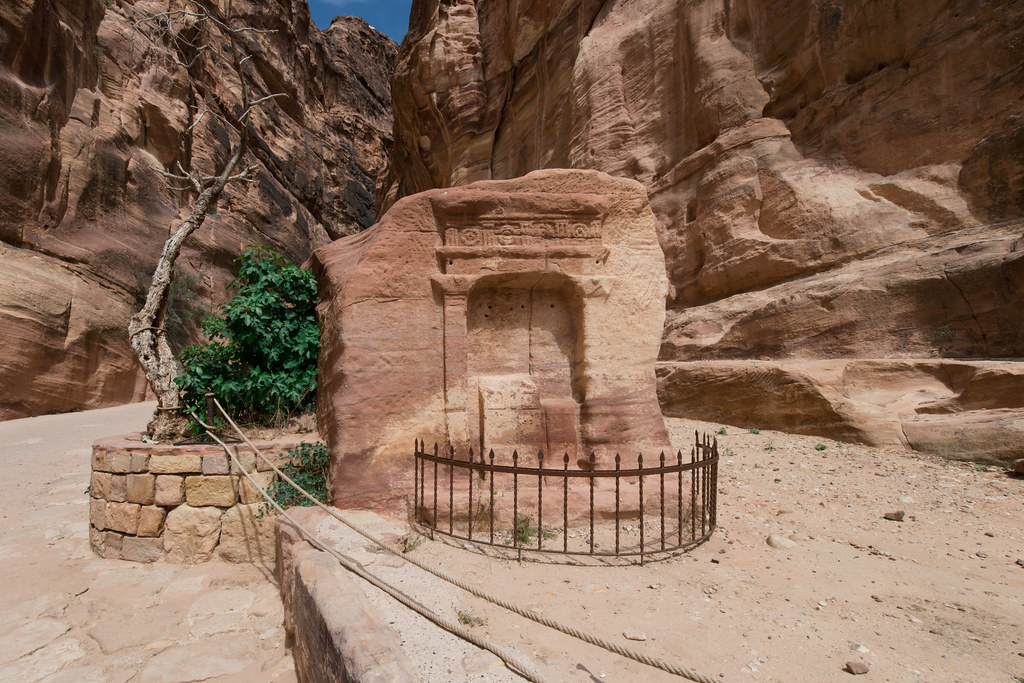
The 1.2 km natural fault that forms the entrance, narrowing to a few metres between 80 m walls, with the remains of the Nabataean water channels cut along both sides. Walk it early, when it is still in shadow and largely empty.
- 02
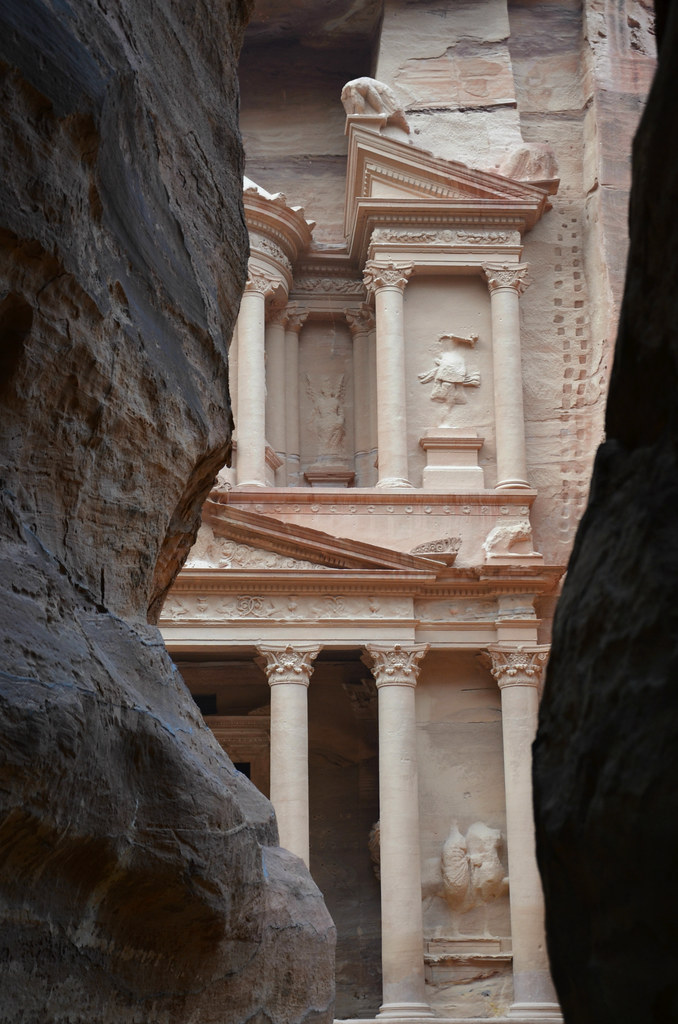
Al-Khazneh, the Treasury
The 40 m rock-cut facade at the end of the Siq, most likely the mausoleum of the Nabataean king Aretas IV. It faces east, so morning light is when the carving reads best; by mid-afternoon it is flat and in shade.
- 03
The Street of Facades, Theatre and Royal Tombs
The main valley beyond the Treasury, with the Urn, Silk, Corinthian and Palace tombs cut into the eastern cliff. Climb to the Urn Tomb terrace for the widest view of the basin.
- 04
Ad-Deir, the Monastery
The largest facade at Petra, 47 m wide, reached by around 800 rock-cut steps from the Basin restaurant. Allow two and a half hours return. Late afternoon light is the best of the day, and the crowds have gone.
- 05
Little Petra and Wadi Rum
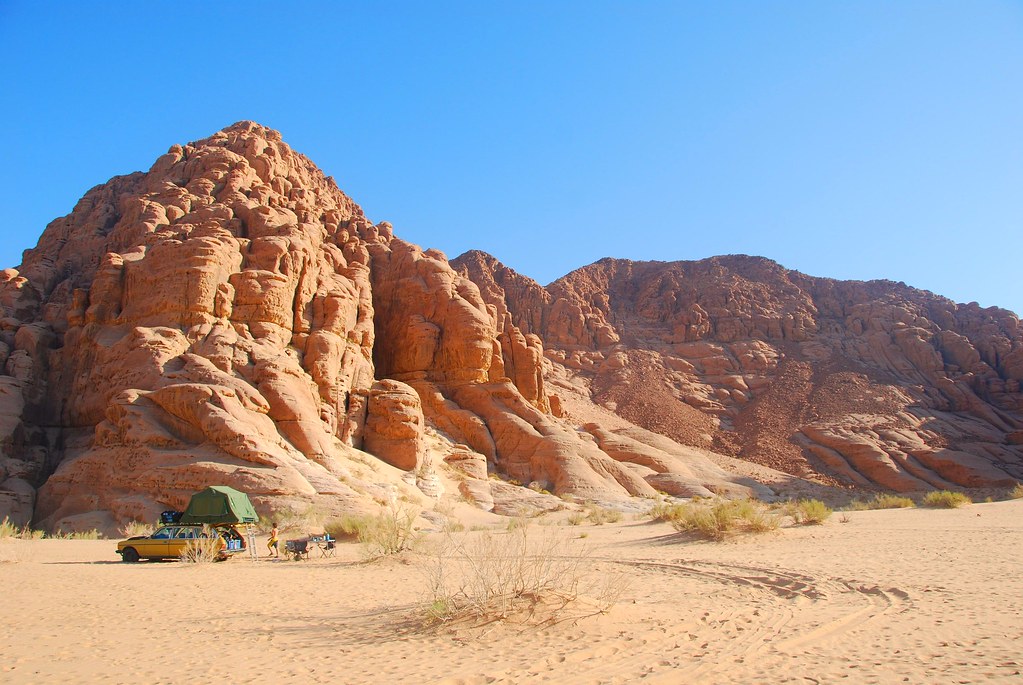
Siq al-Barid, eight kilometres north, is a miniature Nabataean suburb with surviving painted ceilings and almost no queue. Wadi Rum, two hours south, is a protected desert of sandstone and granite where an overnight bivouac is the standard extension.
What to eat and drink
Mansaf
Jordan's national dish: lamb cooked in fermented dried yoghurt, served over rice and flatbread. Traditionally eaten with the right hand at communal gatherings.
Zarb
Bedouin barbecue cooked in a sand oven, the standard evening meal at Wadi Rum camps.
Mezze
Hummus, mutabbal, fattoush, makdous and warm bread — the default lunch in Wadi Musa and Amman alike.
Bedouin tea
Black tea with sage or sugar, poured everywhere. Accepting a glass is a normal part of a conversation, not a sales pitch.
Practicalities
- Visa
- Most nationalities get a visa on arrival. The Jordan Pass, bought online before you fly, includes the visa fee and one, two or three days of Petra entry, and pays for itself on almost any itinerary.
- Currency
- Jordanian dinar (JOD), pegged to the US dollar. Carry cash for Bedouin stalls, donkeys, guides and Wadi Rum camps; cards work in hotels and larger restaurants.
- Getting around
- Amman to Petra is around three hours by road on the Desert Highway, or four on the far more scenic King's Highway via Dana and Shobak. Private drivers are the norm. Aqaba airport is 90 minutes from Wadi Rum.
- Walking and fitness
- Expect 8-15 km a day on uneven rock with steps and no handrails. Horses to the Siq entrance are included in the ticket; donkeys and camels inside the site are not, and are optional.
- Dress
- Jordan is relaxed but conservative. Shoulders and knees covered for both men and women is appropriate, and long sleeves help with the sun.
- Petra by Night
- Runs Monday, Wednesday and Thursday evenings, with the Siq and the Treasury lit by around 1,500 candles. It is a separate ticket and is not included in the Jordan Pass.
Frequently asked questions
How many days do you need at Petra?+
Two full days covers the main valley on day one and the Monastery with Little Petra on day two. One day is enough only to reach the Treasury and the Royal Tombs at a rush.
What is the best time of day to see the Treasury?+
Between 7am and 9.30am. It faces east, so the sun reaches the facade in the morning and the Siq is still cool and quiet. From about 1pm it is in shadow.
How hard is the climb to the Monastery?+
Around 800 uneven rock steps rising roughly 220 m, taking 45-60 minutes up. Most reasonably fit people manage it with breaks; donkeys are available but the path is steep and narrow.
Is Petra suitable for children or older travellers?+
Yes, with planning. The Siq to the Treasury is flat, about 2 km each way, and horse carriages can cover it. The Monastery and High Place climbs are not suitable for anyone unsteady on uneven ground.
Is Jordan safe to visit?+
Jordan is one of the most stable countries in the region and tourism infrastructure around Petra and Wadi Rum is well established. Check your own government's current travel advice before booking.
Should I add Wadi Rum?+
Yes, if you have the nights. One overnight in a desert camp two hours south turns a site visit into a proper Jordan trip, and the drive itself is part of it.
What should I wear and carry?+
Broken-in walking shoes with grip, a hat, two litres of water per person, sunscreen and a layer for the evening — desert temperatures drop sharply after dark, even in spring.
Do I need a guide?+
The site is navigable without one, but a licensed guide for the first half-day transforms it. Petra is essentially unlabelled, and almost everything you are looking at needs explaining.
Plan your Petra trip
Tell us your dates.
Share a few details and a specialist will shape an itinerary around the season you are travelling in.