Adventure · Scandinavia
Northern Lights Aurora Chase in Finnish Lapland
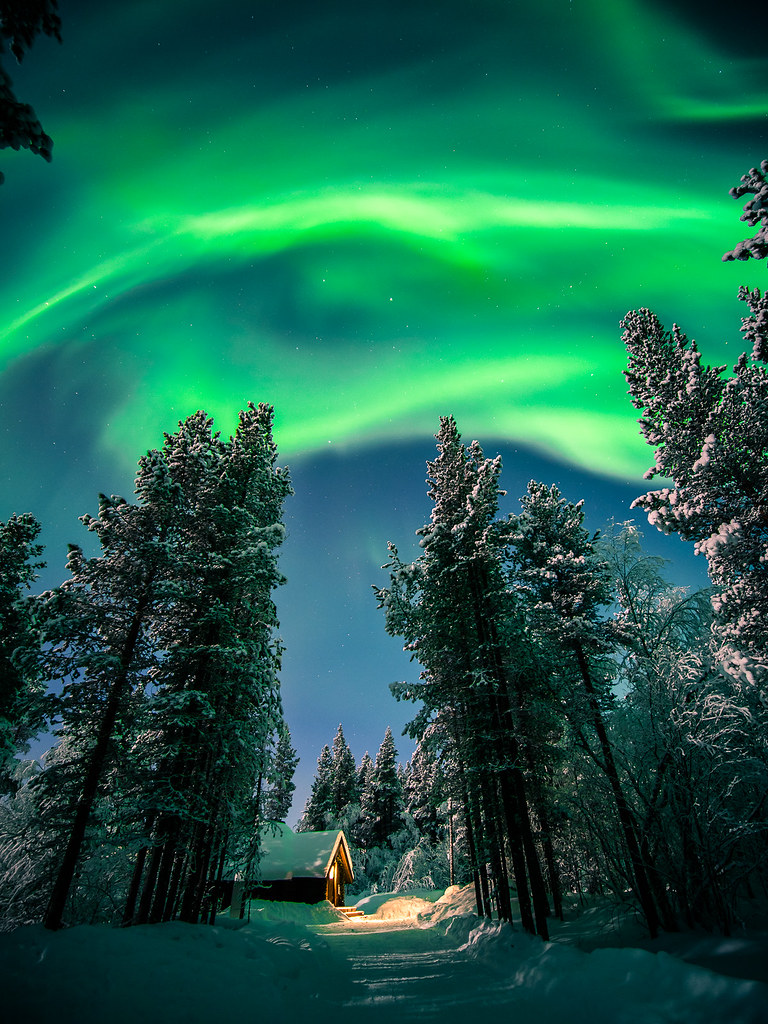
A private aurora chase with a guide who reads the cloud maps and the Kp index each afternoon and then drives, sometimes two hundred kilometres, to find clear sky. There is no fixed viewpoint: the route is decided at 6pm from the forecast. Thermal gear, a heated shelter, a campfire and a photographer who sets up your camera are all part of the night.
- Rovaniemi
- Levi
- Saariselkä
- Aurora borealis
- Glass igloo
- Kp index
Where and how we chase
Base yourself in one of these and we chase outward from it. Three consecutive nights gives the best odds.
- 01
Rovaniemi and the Arctic Circle
Best flight connections and the widest road network for chasing away from cloud.
- 02
Levi and Ylläs, western Lapland
Fell country with high open viewpoints and little light pollution.
- 03
Saariselkä and Inari
Furthest north, lowest light pollution and the longest aurora season, from late August to early April.
- 04
Glass igloos and aurora cabins
Heated glass-roofed rooms so you can watch from bed on the nights the sky opens at 3am.
- 05
Snowmobile and husky chases
Reach frozen lakes and forest clearings that cars cannot, with a sled and a heated suit.
What's included
- Private guide and aurora forecaster for the night
- Thermal suit, boots, gloves and hand warmers
- Heated vehicle and a wilderness shelter or lavvu with a fire
- Hot berry juice, coffee and grilled sausages
- Tripod-mounted long-exposure photographs of you under the lights
- Hotel pickup and return, however late the night runs
How it works
- 1
Afternoon forecast
Your guide reviews the Kp index, solar wind and satellite cloud maps and sets the direction at around 6pm.
- 2
The chase
Drive to the clearest patch of sky, often an hour or two away, stopping wherever the sky opens.
- 3
Wait by the fire
A shelter, a campfire and hot drinks while the sky is watched. Most displays arrive between 9pm and 1am.
- 4
Photography
The guide sets your camera or shoots you on his, and sends the files the next morning.
When to go
Late August to early April. September and March have the strongest equinox activity and milder temperatures; December and January give the longest darkness but the harshest cold.
Frequently asked questions
What are the chances of seeing the aurora?+
On a clear night in season, roughly three nights in four in northern Lapland. Over three consecutive nights of chasing, most guests see a display at least once — but nobody can promise it.
Why chase instead of waiting at the hotel?+
Cloud, not aurora activity, is the usual reason people see nothing. Driving to a clear sky is what converts a forecast into a sighting.
How cold does it get?+
Minus 10 to minus 30 degrees Celsius from December to February. Full thermal suits, boots and gloves are provided over your own layers.
Can children come?+
Yes, from about six. Nights run late, so families often take the shorter three-hour version with an earlier return.
Do I need a special camera?+
No — your guide photographs you and shares the files. If you bring a camera, bring a tripod and spare batteries; cold drains them within an hour.
How many nights should we book?+
Three. One night is a coin toss, three makes a sighting likely and lets you skip a hopeless forecast.
Will my phone photograph the lights?+
Recent iPhone and Android night modes capture a faint aurora surprisingly well on a tripod. Faint displays often look stronger on camera than to the eye.
What else can we add to the trip?+
Husky and reindeer sledding, ice fishing, a snow hotel night, and Santa Claus Village in Rovaniemi for families in December.
Reserve this experience
Let's set the date.
Share a few details, a specialist will confirm availability and pricing within one working day.